CSA Delivery – May 16, 2012 – Yes, More Basil and Peaches

I think I might have been able to reuse my picture from last week, because this week’s delivery brought more of the same.  I’ve been having so much fun with the fresh basil – I can’t wait until we have it readily available in our garden.

The peaches taste absolutely delicious with yogurt and granola – I’m hooked (as long as I’m not racing out the door in the morning).

I’ve been either grilling or sautéing the zucchini with some onions and it tastes great seasoned with a bit of salt and pepper.  We decided to plant it in our garden again this year, but hopefully we’ll be able to keep up with it instead of producing mutant zucchini.

A Homemade Mustard Experiment

I love mustard.  Even as a child, I chose it over ketchup all the time.  Nobody else in my family has this infatuation with mustard (which is probably why I get weird looks when I eat an afternoon snack of mustard on a piece of toast).

As my tastes have matured, I’ve grown to like spicy mustards much more than good ol’ French’s.  I also use brown mustards to whip up a quick salad dressing with olive oil/vinegar/lemon juice – it seems to go well with almost any type of salad.

I recently ran out of brown mustard and am now coming dangerously close to running out of French’s.  Instead of adding it to my grocery list, I decided that I was going to put the two packets of mustard seeds in my pantry to use.

The recipe that I used produced a very strong mustard, although some of the flavour should mellow over time.  This will definitely clear your sinuses, so if you want something a bit more tame, just increase the ratio of yellow mustard seeds to black. Also, I opted out of adding turmeric to this recipe, because that is generally done to produce the colour we are used to seeing and actually doesn’t play any part in the recipe.  Besides, turmeric has a bitter aftertaste, and there’s enough flavour in this mustard already.

Ingredients

  • 1/4 cup yellow mustard seeds
  • 1/4 cup black or brown mustard seeds
  • 1/2 cup water
  • 1/2 cup vinegar
  • 1/4 tsp salt
  • 2 tsp dry mustard powder
  • sugar to taste (optional – this was just to cut some of the sharpness of the mustard)
  1. In a wide mouth mason jar, mix the mustard seeds, water, vinegar and salt. Close the lid, give it a good shake and leave in the refrigerator for 48 hours.
  2. Use a stick blender to blend the contents of the jar – the dark mustard seeds will not break down, but most of the yellow ones should. Add in the dry mustard and taste the mustard. If it is too intense, add in the sugar and blend again.
  3. Return the mustard to the refrigerator and allow it to settle for a few days before using.

There are so many ways to spruce up this mustard by adding herbs, honey, chili peppers or even preserved fruit – the possibilities are endless!

How I’ve Managed to Become (Almost) Soy-Free on a Vegetarian Diet

I decided to drop soy from my diet a few months ago.  Not for any particular reason – I just love doing experiments like this in my diet.  What I didn’t expect was that I would have more energy and better digestion as a result.

I’m always reading labels – once I started to understand the implications of High Fructose Corn Syrup, I was always scanning labels to watch for it.  I know folks have mixed opinions on this ingredient, but for me, it is an ingredient that indicates a highly processed food.  If a food item contained HFCS, I used it as a trigger of which foods to avoid – I’ve begun to do the same with soy.  All those companies boasting “natural” ingredients as a marketing ploy are still generally using some form of soy as a filler.

It wasn’t an easy feat to eliminate soy from my diet. I must warn you though – once you starting keeping an eye out for it, you’ll realize how rampant and prominent it is in almost all the foods you buy – and unfortunately in a highly processed and genetically modified form.  Here’s how I did it:

  1. I stopped buying “fake meat” foods about three years ago.  I had a bit of an epiphany back then – as a vegetarian, why would I try to emulate a food that I otherwise wouldn’t want to eat?  But note that I said I stopped buying these items – that doesn’t mean that I won’t eat them at a restaurant when it is the only vegetarian option on the menu.
  2. My naturopath made a comment to me about soy milk once – she said that if they can turn a green bean into a white beverage, can you imagine how much processing it must go through? That comment stuck with me, and now I opt for high-quality organic milk instead or almond milk in a pinch.
  3. I generally don’t eat protein bars on a regular basis, but they make a great snack or meal replacement when I’m traveling for work and the only food options are icky conference room food.  I made an extra effort to find protein bars that don’t contain soy – you think that may be easy, but it really isn’t.  Most of the popular vegetarian options all contain soy.  I stick with Larabar or Pure; I’ve been meaning to try Zing Bars as well.
  4. I also try to supplement with a protein shake at least a few times a week.  Most vegan proteins contain soy, but there are many pea or raw proteins on the market which offer a soy-free alternative – the only problem is I find them to be horribly disgusting.  I stick to Tera’s Whey Dark Chocolate Protein Powder – it’s organic and fair-trade, and it tastes great just mixed in some water.
  5. My favourite Thai restaurant is Blue Mango in San Jose – I’m there at least once a week for lunch, if not more often.  The servers and managers know me by name and they treat me so well.  Removing tofu from my favourite dishes was painful at first, but I’ve learned to love the simplicity of a variety of vegetables in my curries.
  6. A lot of vegan dessert recipes use tofu or soymilk – I’ve found that almond milk always works as a baking alternative.  I’ve made lemon bars without soy and although I haven’t had a chance to try it yet, I’m sure cashew cream would work really well in cheesecake alternatives.
  7. I love eating and/or making brunch – actually, I love having potatoes for breakfast.  Tofu scramble with hash browns was a regular option at our favourite brunch restaurant.  Now that tofu is out of the picture, I opt for a breakfast burrito with rice and beans instead…with a side of potatoes of course.  There’s also a recipe for chick pea flour scramble that I’ve been meaning to try.
  8. I don’t use a lot of “mayo”, but I do like to use it to make creative sandwich spreads or homemade salad dressings in a pinch.  It is one of those staples I keep in my refrigerator, but generally don’t use a lot.  Follow Your Heart now offers a soy-free version has a reasonable ingredient listing.
  9. I was never a fan of fake cheese, so that was easy to eliminate from my diet :) .  Nutritional yeast and/or cashew cream is a better option in my opinion to get that nice cheesy flavour in a dish (if you need a vegan option).  In general, I opt for organic cheese at my local farmers market (Spring Hill is my favourite) or Organic Valley (who offers a large selection of rennetless organic options).
  10. Many vegan recipes call for Earth Balance spreads in lieu of butter or margarine and they now offer a Soy-Free option.
  11. Store-bought bread is a big culprit of using soy lecithins and oils, although I have finally found a few bakeries who provide me with a variety of options.
  12. We used to always have a variety of boxed cereals in the pantry, but now I just make my own granola at home.  Even if you avoid the sugary cereals and buy the “natural” ones, I’m sure soy is a prominent ingredient.
  13. Legumes and lentils have become a staple in our meals and as a result, I am no longer scared of my pressure cooker.  I’m still a bit wary about leaving my slow cooker running all day while I’m at work, even though I feel that beans taste so much better when simmered all day as opposed to the pressure cooker.  That being said, if I’m planning on using the beans in a burger or in a recipe that calls for them to be mashed, the pressure cooker works just fine.
  14. Avocados and hummus are staples to add to sandwiches for a quick lunch – no more Tofurkey here!
  15. Punjabi cooking was always one of the last things I would think of to make when deciding on what to make for dinner – it always seemed like so much more work.  I’m getting better at it though because a simple meal of dahl and rice is a perfect way to avoid soy.

I say that I’m almost soy-free because I’m not going to sweat the small stuff. If I’m traveling for work and the only vegetarian option on the menu is tofu based, I’ll eat it.  If I’m at a friends place for dinner, I’m not going to make them pull out the ingredient list for everything they are feeding me.  But at home, ensuring that I have a large variety of legumes, grains, nuts and vegetables always available in my kitchen has made this process extremely easy, with the added bonus of feeling great!

CSA Delivery – May 9, 2012 – Peaches…It’s Summer!
This week’s delivery had peaches! Does that make you happy? It makes me happy because it means summer is here!  I love summertime stone fruits…plums, peaches, nectarines, cherries, apricots..mmm…

Everything else just seems boring now…grapefruit, broccoli, green beans, basil and zucchini…although it is the first time I’m receiving green beans this year – I think I’ll make my green bean and purple potato salad if I’m able to pick up the potatoes at the farmers market this weekend.

Poblano and Pinto Bean Stew (Vegan) with (Not-so-vegan) Cheesy Cornbread
This year, we planted a few poblano pepper plants in our garden again. They are one of my favourite peppers because they have such a strong flavour with just a hint of spiciness. As a summertime staple in our house, I love finding new ways to use them.  One of my favorite recipes is in a stuffed form like I did with my “Good-for-you Chilli Relleno“.

Today was a work-from-home day – whenever that happens, I love to take advantage of it by making something that can simmer on the stove all day long.  Today, I decided to make a stew out of poblano peppers and pinto beans.  I was still trying to decide what to serve along with the stew, when my mom popped up on GTalk to tell me that she had made a fantastic corn bread today – her timing was impeccable, because right away, I knew that was what I was going to make along with my stew (thanks for the recipe Mom!).

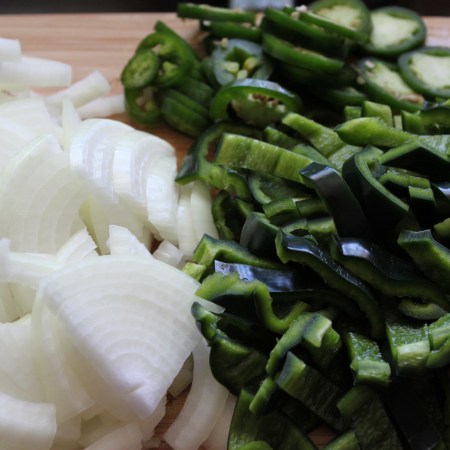
I wanted the stew to be chunky so I cut the onions, poblanos and jalapenos into thick strips.  I love taking some extra time to prep ingredients – I feel that it makes such an impact on the final dish.

I allowed the peppers and onions to release their juices so all the flavours came together with the spices.

We also have beautiful cilantro growing in our garden – nothing beats running to the garden to grab some herbs to spruce up a dish.

This corn bread recipe was a hit – I stayed pretty true to the original recipe which came from Robin Hood Home Baking - next time, I’ll try some variations to include whole wheat flour and perhaps even try to turn it into a vegan recipe.

I must warn you, this was a spicy meal – keep the tissue box close at hand, because it will clear your sinuses!

For the stew:

Ingredients

  • 1 tsp cumin
  • 3 poblano peppers
  • 1 large white onion
  • 1/4 cup frozen or canned corn (or up to 1 cup – I had some leftover from making the cornbread and just wanted to use it up)
  • 2 jalapeños
  • 2 cloves garlic
  • 1 tsp Mexican chili powder
  • 2 tbsp tomato paste
  • 4 tbsp tomatillo salsa (optional – I had some already made in the refrigerator)
  • 1-2 cups dry pinto beans, soaked
  • salt to taste
  • 1 avocado
  • 1 lime, juiced
  • fresh cilantro, chopped
  1. Prep the onions, poblanos and jalapeños by cutting them into thick slices. Mince the garlic.
  2. Heat a bit of oil in a large pot, and add in the cumin – once it is fragrant, add the onions. Allow the onions to soften slightly and then add both of the peppers, corn and garlic.
  3. Once the vegetables have softened, add the chili powder – then mix in the tomato paste and tomatillo salsa (if using) until all of the vegetables are well coated.
  4. Add the beans to the mix, stir and add enough water to cover 2 inches above the ingredients. Add the salt.
  5. Bring to a boil and simmer on medium-low for as long as it takes for the beans to cook through completely – if you’re not using a pressure cooker, expect at least a few hours. Another option would be to make the stew to this point the night before and leave it in your slow cooker overnight.
  6. Mash the avocado with the lime juice and mix into the stew once the beans are fully cooked – allow it to simmer for a bit longer and then add the cilantro before serving.

For the cornbread:

Ingredients

  • 2 “eggs” using ground flax (2 tbsp ground flax + 6 tbsp water)
  • 1 cup buttermilk (I used 1 cup of milk + 1 tbsp of vinegar)
  • 1/4 cup butter melted
  • 1 cup Fresh, canned or thawed frozen corn kernels
  • 1 cup shredded cheddar cheese (I used an extra sharp cheddar)
  • 1/4 cup finely chopped sweet red pepper (I used a jalapeño instead)
  • 1 cup all purpose flour
  • 1 cup cornmeal
  • 1 tbsp sugar
  • 1 tbsp baking powder
  • 1 tsp salt
  • 1/2 tsp baking soda
  1. Preheat oven to 375F.
  2. Whisk “eggs”, buttermilk and melted butter in a large bowl. Stir in corn, cheese and pepper.
  3. Combine flour, cornmeal, sugar, baking powder, salt and baking soda.
  4. Add to liquid ingredients all at once, stirring just until moistened.
  5. Spread batter in prepared pan.
  6. Bake for 20 to 25 minutes or until toothpick inserted in center comes out clean. Test in a few areas as I had some pockets that were still wet even though the centre was completely dry.

Welcoming Summer Weather with Coconut Ice Cream

It’s finally t-shirt weather in California – we spent most of Sunday planting the rest of our summer garden and pulling out our patio furniture.  I can’t wait for the tomatoes, peppers and eggplants to start flowering.

For those who are interested, we planted two varieties of tomatoes – Paul Robeson, which is a black variety and an Orange/Green Zebra, both heirloom varieties.  We planted a bunch of tomatillos (which will hopefully produce enough to can salsa by the end of the summer, along with a few varieties of hot peppers. Once things get going in the garden, I’ll follow up with a more detailed post.  For now, onto the subject at hand, coconut ice cream!

I have been wanting to try new flavours of ice cream, and the warm weather this weekend was a perfect opportunity.  You could easily make this recipe vegan by using a non-dairy creamer (such as Silk).  I also had a perfectly ripe pineapple that I had picked up earlier that week – how can you go wrong with pineapple and coconut?

Ingredients

  • 400 ml coconut milk
  • 1/8 to 1/4 cup sugar to personal preference (I could only find sweetened coconut cream at the grocery store, so I didn’t add any sugar when I made this batch)
  • 425 g coconut cream
  • 1/2 pint whipping cream (use a non-dairy creamer if you’d like to make the recipe vegan)
  • 1 tsp vanilla
  • 1/4 cup shredded coconut
  1. If you are using sugar, dissolve it into the coconut milk – otherwise, you can skip this step.
  2. Pour the coconut cream into a large bowl and whisk until all of the lumps are gone.
  3. Add in the remaining liquid ingredients and whisk until completely mixed.
  4. Add in the shredded coconut.
  5. Chill the mixture in the refrigerator for at least 6 hours or overnight.
  6. Follow the instructions provided with your ice cream machine to churn the ice cream – makes 6 to 8 servings.

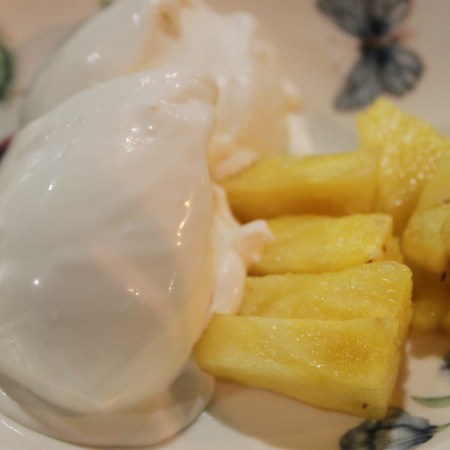
I served the ice cream with pineapple on the side – it would have also tasted delicious with some toasted coconut or some toasted nuts. I served the ice cream right out of the ice cream maker, but you can always allow it to set for a bit longer in the freezer if you prefer a more frozen consistency.